
 March 7, 2026
 No Comments
VLEO Satellite Systems: Meaning, Benefits and Applications
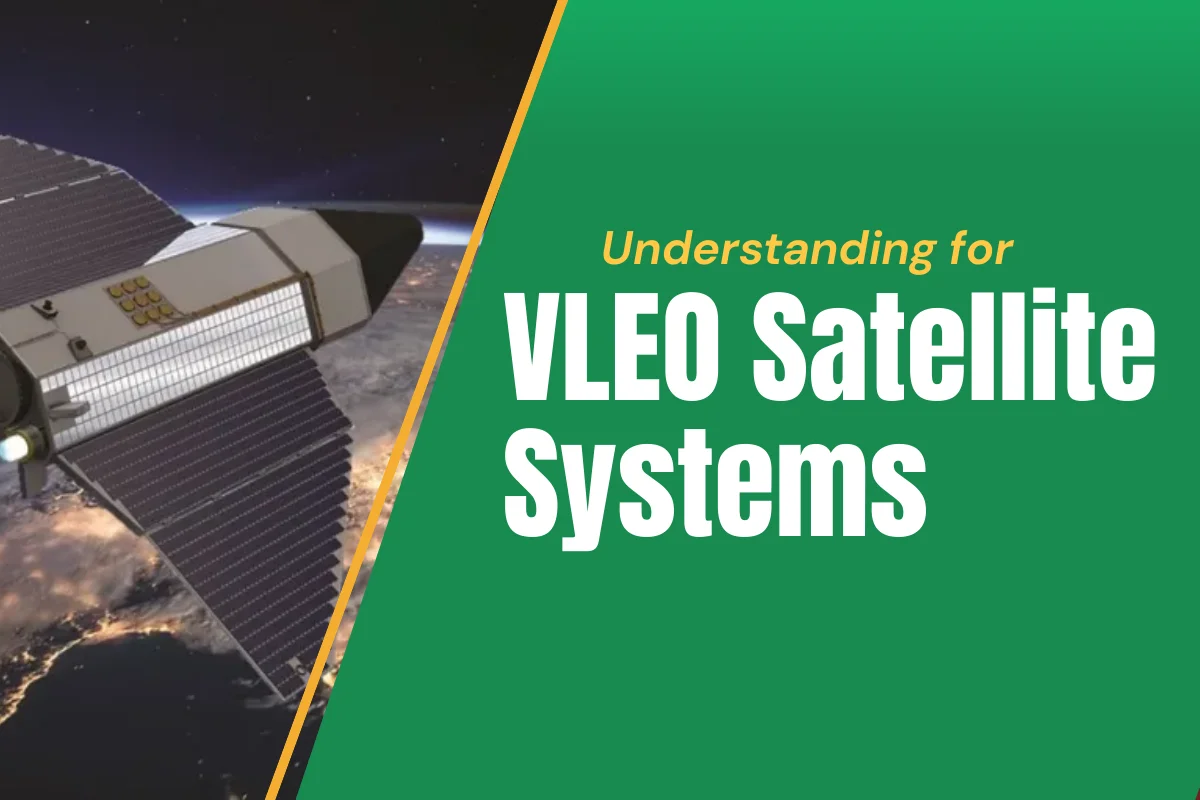
VLEO Satellite Systems (Very Low Earth Orbit Satellites) represent the next generation of space technology designed to operate at extremely low altitudes above Earth.
VLEO satellites orbit closer to Earth than traditional satellites, enabling faster communication, better imaging, and lower operational costs.
Such technological advancements are increasingly important for space research, defence, and telecommunications, and are regularly discussed in the Current Affairs section of CivilsTap.
What are VLEO Satellite Systems?
VLEO satellites operate at an altitude of approximately 160 km to 450 km above Earth’s surface, which is lower than the traditional Low Earth Orbit satellites.
Key Characteristics
Extremely low orbital altitude
Reduced communication latency
Higher image resolution
Lower launch costs
Concepts related to satellite technology and space missions are covered in detail in CivilsTap Study Material.
Types of Satellite Orbits
| Orbit Type | Altitude Range | Common Use |
|---|---|---|
| Low Earth Orbit (LEO) | 500 – 2000 km | Earth observation |
| Very Low Earth Orbit (VLEO) | 160 – 450 km | High-resolution imaging |
| Medium Earth Orbit (MEO) | 2000 – 35786 km | Navigation systems |
| Geostationary Orbit (GEO) | 35786 km | Communication satellites |
VLEO offers improved efficiency compared to traditional satellite orbits.
Why VLEO Satellites Are Important
Faster Communication
Since VLEO satellites orbit closer to Earth, signal travel time is shorter, resulting in:
Lower latency
Faster data transmission
Higher Image Resolution
VLEO satellites can capture more detailed images of Earth’s surface, which is useful for:
Disaster management
Environmental monitoring
Defence surveillance
Reduced Space Debris Risk
Because VLEO satellites are closer to Earth, atmospheric drag naturally pulls them down faster, reducing long-term space debris.
Advantages of VLEO Satellite Systems
| Advantage | Explanation |
|---|---|
| Low Latency | Faster communication signals |
| High Resolution | Better Earth observation images |
| Lower Launch Cost | Smaller satellites required |
| Reduced Space Debris | Faster orbital decay |
VLEO satellites are considered a sustainable alternative for future satellite constellations.
Challenges of VLEO Satellites
Despite their advantages, VLEO satellites face certain challenges.
| Challenge | Reason |
|---|---|
| Atmospheric Drag | Increased friction from atmosphere |
| Shorter Lifespan | Satellites may deorbit faster |
| Advanced Propulsion Needed | Continuous orbit correction required |
These challenges are driving innovation in propulsion systems and satellite materials.
Applications of VLEO Satellite Systems
Earth Observation
Climate monitoring
Agriculture assessment
Urban planning
Communication
High-speed internet networks
Satellite communication constellations
Defence & Security
Border surveillance
Strategic monitoring
Understanding these technological developments is important for science and technology preparation, which can be strengthened through CivilsTap Courses.
Global Developments in VLEO Satellites
Several countries and private companies are investing in VLEO systems.
United States – SpaceX and defence programs
China – satellite constellation projects
Europe – Earth observation initiatives
These projects aim to improve global communication and monitoring systems.
To test your understanding of such science topics, aspirants can practice MCQs through the Daily Quiz.
Exam Relevance for UPSC and State PCS
VLEO satellite technology can be linked with multiple exam topics.
| Exam Stage | Relevance |
|---|---|
| Prelims | Types of satellite orbits |
| Mains GS-III | Space technology developments |
| Interview | Future of satellite communication |
Quick revision charts and notes related to such topics are available in Free Downloads.
Quick Summary
| Topic | Key Point |
|---|---|
| Technology | Very Low Earth Orbit satellites |
| Altitude | 160–450 km |
| Advantage | Low latency & high resolution |
| Applications | Communication, surveillance |
| Exam Relevance | GS-III Science & Technology |
Conclusion
VLEO Satellite Systems represent a major advancement in satellite technology, offering improved communication speed, enhanced Earth observation capabilities, and reduced space debris risks. As space technology continues to evolve, VLEO satellites are expected to play a crucial role in future satellite constellations.
For competitive exam aspirants, understanding such innovations is important to connect science, technology, and global space developments.
Ask your Query
Recent Posts
- UPSC Prelims 2026 Paper Analysis: Subject-Wise Difficulty and Lessons for IAS 2027
- UPSC CSAT Preparation Strategy 2027: Complete Study Plan, Syllabus and Tips for Beginners
- Asian Games 2026: Winners & Key Highlights
- HPAS Mains Answer Writing Strategy: Tips, Format and Examples
- What Should a Good UPSC Foundation Course Include? Complete Checklist for Beginners
Browse By Category
- Chandigarh Exam (1)
- Daily Current Affairs (4)
- Defence (1)
- EPFO (9)
- HP Allied (19)
- HP Teaching Exams (4)
- HPAS/HAS (77)
- IAS (90)
- Monthly Current Affairs (1)
- NET Exam (3)
- New Notifications (5)
- PCS (73)
- UPSC (89)
- Weekly Current Affairs (2)
- Yearly Current Affairs (5)

Archives
- October 2026 (7)
- September 2026 (10)
- August 2026 (11)
- July 2026 (13)
- June 2026 (10)
- May 2026 (11)
- April 2026 (10)
- March 2026 (10)
- February 2026 (10)
- January 2026 (9)
- December 2025 (8)
- November 2025 (10)
- October 2025 (10)
- September 2025 (10)
- August 2025 (10)
- July 2025 (6)


Leave Comment