
 June 2, 2026
 No Comments
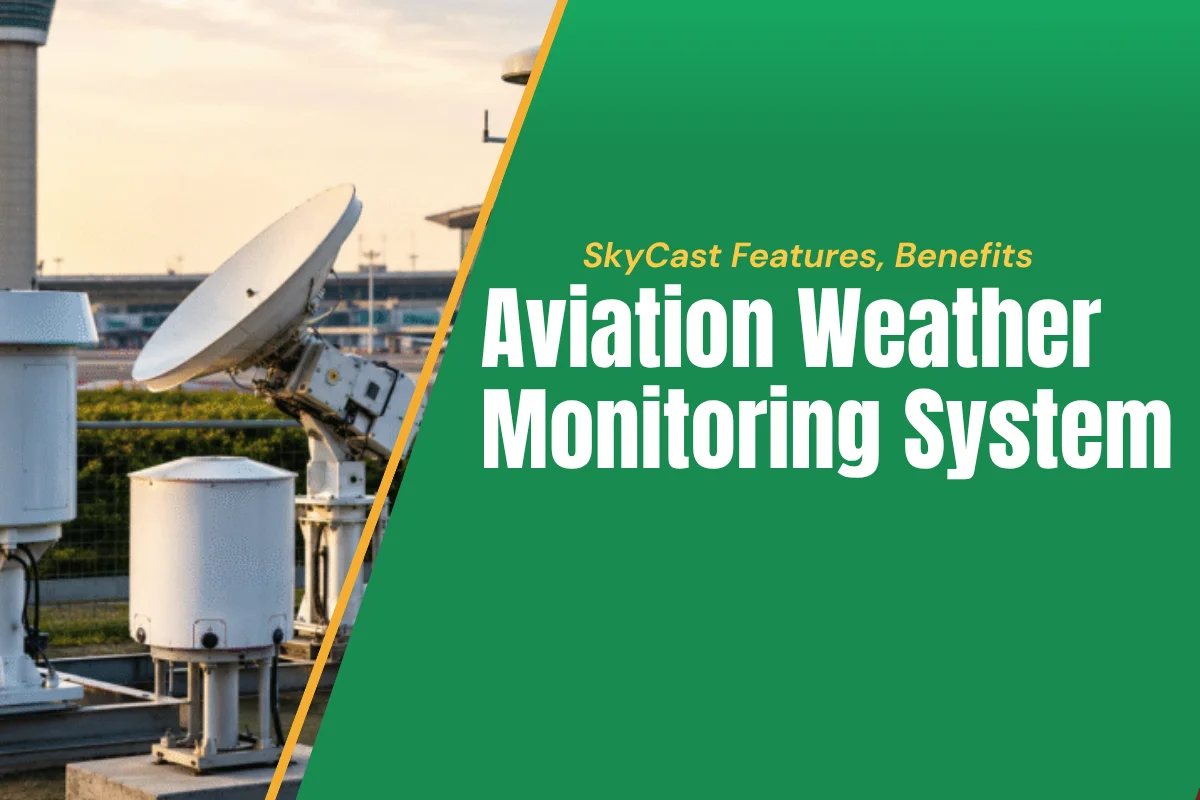
SkyCast Aviation Weather Monitoring System
The aviation sector depends heavily on accurate and real-time weather information. Even minor changes in weather conditions can significantly impact flight safety, operational efficiency, and air traffic management. To address these challenges, India has introduced the SkyCast Aviation Weather Monitoring System, an advanced weather forecasting and monitoring platform designed specifically for aviation operations.
The SkyCast Aviation Weather Monitoring System represents a major step toward modernizing India’s aviation infrastructure through the use of real-time meteorological data, advanced forecasting technologies, and digital weather intelligence.
For UPSC aspirants, this topic is important from the perspectives of Science and Technology, Aviation, Meteorology, Disaster Management, Infrastructure Development, and Transportation.
What is the SkyCast Aviation Weather Monitoring System?
The SkyCast Aviation Weather Monitoring System is an advanced weather observation and forecasting platform that provides real-time meteorological information to support aviation operations.
The system helps airports, pilots, air traffic controllers, and aviation authorities monitor weather conditions and make informed decisions to ensure safe and efficient flight operations.
SkyCast utilizes:
Real-time weather monitoring
Automated weather stations
Artificial Intelligence-based forecasting
Satellite data integration
Doppler Weather Radar inputs
Aviation-specific weather analytics
The platform is designed to improve flight safety and operational efficiency across India’s growing aviation network.
Why is Weather Monitoring Important in Aviation?
Weather remains one of the most critical factors affecting aviation safety.
Adverse weather conditions can lead to:
Flight delays
Flight diversions
Reduced visibility
Turbulence
Thunderstorms
Wind shear
Heavy rainfall
Lightning hazards
Accurate weather forecasting enables aviation authorities to mitigate risks and ensure safer flight operations.
Key Features of the SkyCast Aviation Weather Monitoring System
1. Real-Time Weather Data Collection
The system continuously collects meteorological data from multiple sources.
These include:
Airport weather stations
Radar systems
Satellite observations
Ground-based sensors
This ensures accurate and up-to-date weather information.
2. Advanced Weather Forecasting
SkyCast uses sophisticated forecasting models to predict:
Rainfall
Thunderstorms
Fog formation
Wind speed and direction
Temperature variations
Visibility conditions
These forecasts help aviation personnel plan operations effectively.
3. Early Warning System
One of the major strengths of SkyCast is its ability to generate early warnings for hazardous weather conditions.
Alerts can be issued for:
Severe thunderstorms
Lightning activity
Cyclonic disturbances
Heavy precipitation
Low visibility events
This significantly enhances aviation safety.
4. Integration with Air Traffic Management
The system supports air traffic controllers by providing real-time weather intelligence.
Benefits include:
Better route planning
Reduced flight disruptions
Efficient airspace management
Improved passenger safety
5. Digital Weather Dashboard
SkyCast provides a user-friendly digital interface where aviation stakeholders can access:
Weather maps
Radar imagery
Forecast reports
Risk assessments
Weather alerts

Significance of SkyCast for India’s Aviation Sector
Enhancing Flight Safety
The primary objective of SkyCast is to improve aviation safety through accurate weather prediction and monitoring.
Supporting Airport Operations
Airport authorities can make informed decisions regarding runway operations, aircraft movement, and emergency preparedness.
Reducing Economic Losses
Weather-related delays and disruptions impose significant costs on airlines and airports. Improved forecasting helps minimize such losses.
Strengthening Aviation Infrastructure
The system contributes to India’s broader efforts to modernize transportation and aviation infrastructure.
Role of Technology in Modern Aviation Weather Monitoring
Modern aviation weather systems increasingly rely on emerging technologies.
Artificial Intelligence (AI)
AI helps analyze large volumes of weather data and generate more accurate forecasts.
Big Data Analytics
Historical weather patterns and real-time observations are combined to improve prediction accuracy.
Satellite Technology
Weather satellites provide extensive coverage and continuous monitoring of atmospheric conditions.
Doppler Weather Radar
Radar systems help track storms, rainfall intensity, and wind patterns.
For more Science & Technology updates:
https://www.civilstap.com/current-affairs/
SkyCast and Disaster Risk Reduction
The SkyCast Aviation Weather Monitoring System also contributes to disaster preparedness.
It can assist authorities in monitoring:
Cyclones
Extreme rainfall
Thunderstorms
Flood-producing weather systems
This supports timely decision-making and emergency response efforts.
Related Reading:
https://www.civilstap.com/current-affairs/
Relevance for UPSC and Other Competitive Exams
UPSC Prelims
Important areas include:
Aviation weather monitoring
Meteorological technologies
Doppler Weather Radar
Satellite-based forecasting
Aviation safety systems
UPSC Mains
Relevant under:
GS Paper III
Science and Technology
Infrastructure
Disaster Management
Transportation Sector
GS Paper II
Governance and Public Service Delivery
Key Facts for UPSC Prelims
| Feature | Details |
|---|---|
| System Name | SkyCast Aviation Weather Monitoring System |
| Purpose | Aviation weather monitoring and forecasting |
| Sector | Civil Aviation |
| Technology Used | AI, Weather Radar, Satellite Data, Automated Weather Systems |
| Benefits | Flight Safety, Operational Efficiency, Early Warnings |
| Relevance | Aviation Infrastructure and Disaster Management |
Challenges in Aviation Weather Monitoring
Despite technological advancements, several challenges remain:
Rapidly Changing Weather Patterns
Climate variability makes weather forecasting increasingly complex.
High Infrastructure Costs
Advanced weather monitoring systems require significant investment.
Data Integration Challenges
Combining data from multiple platforms requires robust technological infrastructure.
Cybersecurity Risks
Digital aviation systems must be protected from cyber threats.
Way Forward
India’s aviation sector is expected to witness rapid growth in the coming decades.
To maximize the benefits of SkyCast, India should focus on:
Expanding weather monitoring coverage.
Integrating AI-driven forecasting models.
Enhancing airport weather infrastructure.
Strengthening disaster preparedness systems.
Promoting research in meteorological sciences.
These measures will improve flight safety and support sustainable aviation growth.
Conclusion
The SkyCast Aviation Weather Monitoring System marks a significant advancement in India’s aviation and meteorological capabilities. By combining real-time monitoring, advanced forecasting, and digital weather intelligence, the system enhances flight safety, improves operational efficiency, and strengthens disaster preparedness.
As India’s aviation sector continues to expand, innovative technologies like SkyCast will play a crucial role in ensuring safe, reliable, and efficient air travel.
For UPSC aspirants, understanding the SkyCast Aviation Weather Monitoring System provides valuable insights into aviation technology, meteorology, infrastructure development, and disaster management.
FAQs:
1. What is the SkyCast Aviation Weather Monitoring System?
The SkyCast Aviation Weather Monitoring System is an advanced weather forecasting and monitoring platform designed to provide real-time meteorological information for safer and more efficient aviation operations. It helps pilots, airports, and air traffic controllers make informed decisions based on accurate weather data.
2. Why is the SkyCast Aviation Weather Monitoring System important?
The system improves aviation safety by providing early warnings about adverse weather conditions such as thunderstorms, heavy rainfall, fog, turbulence, and low visibility. It helps reduce flight delays, diversions, and operational risks.
3. What technologies are used in the SkyCast Aviation Weather Monitoring System?
SkyCast integrates multiple technologies, including:
- Artificial Intelligence (AI)
- Satellite-based weather monitoring
- Doppler Weather Radar
- Automated Weather Observation Systems (AWOS)
- Real-time data analytics
- Digital weather forecasting tools
4. How does SkyCast help improve flight safety?
SkyCast continuously monitors weather conditions and provides real-time alerts about hazardous weather events. This enables pilots and air traffic controllers to adjust flight routes, schedules, and airport operations to ensure passenger and aircraft safety.
5. How is the SkyCast Aviation Weather Monitoring System relevant for UPSC?
The topic is important for UPSC under:
- Science and Technology
- Disaster Management
- Infrastructure Development
- Civil Aviation
- Transportation Sector
It is relevant for both UPSC Prelims and GS Paper III in Mains.
6. What role does SkyCast play in disaster management?
The system helps monitor extreme weather events such as cyclones, thunderstorms, heavy rainfall, and flooding. Early weather warnings support disaster preparedness, emergency response planning, and risk reduction efforts.
7. What are the key benefits of the SkyCast Aviation Weather Monitoring System?
The major benefits include:
- Enhanced flight safety
- Accurate weather forecasting
- Reduced flight delays and diversions
- Better air traffic management
- Improved airport operations
- Early warning of severe weather conditions
- Stronger disaster preparedness and response capabilities
Tags
Airport Weather ForecastingAviation InfrastructureAviation Safety IndiaAviation TechnologyAviation Weather MonitoringCivil Aviation IndiaCivilstapcurrent affairs UPSCDisaster Management UPSCDoppler Weather RadarMeteorology UPSCScience and Technology UPSCSkyCast Aviation Weather Monitoring SystemWeather Forecasting SystemWeather Monitoring SystemAsk your Query
Recent Posts
- What Should a Good UPSC Foundation Course Include? Complete Checklist for Beginners
- India Energy Week 2027: Key Highlights
- HPAS Coaching in Mandi: Offline vs Online Classes for HAS Aspirants
- How to Use Himachal Pradesh Economic Survey and Budget for HPAS 2027 Preparation
- Best Books for HPAS Prelims and Mains Preparation
Browse By Category
- Chandigarh Exam (1)
- Daily Current Affairs (4)
- Defence (1)
- EPFO (8)
- HP Allied (19)
- HP Teaching Exams (4)
- HPAS/HAS (76)
- IAS (86)
- Monthly Current Affairs (1)
- NET Exam (3)
- New Notifications (5)
- PCS (71)
- UPSC (85)
- Weekly Current Affairs (2)
- Yearly Current Affairs (5)

Archives
- October 2026 (3)
- September 2026 (10)
- August 2026 (11)
- July 2026 (13)
- June 2026 (10)
- May 2026 (11)
- April 2026 (10)
- March 2026 (10)
- February 2026 (10)
- January 2026 (9)
- December 2025 (8)
- November 2025 (10)
- October 2025 (10)
- September 2025 (10)
- August 2025 (10)
- July 2025 (6)


Leave Comment