
 May 30, 2026
 No Comments
India’s AI-Powered Leap in Defence Aviation
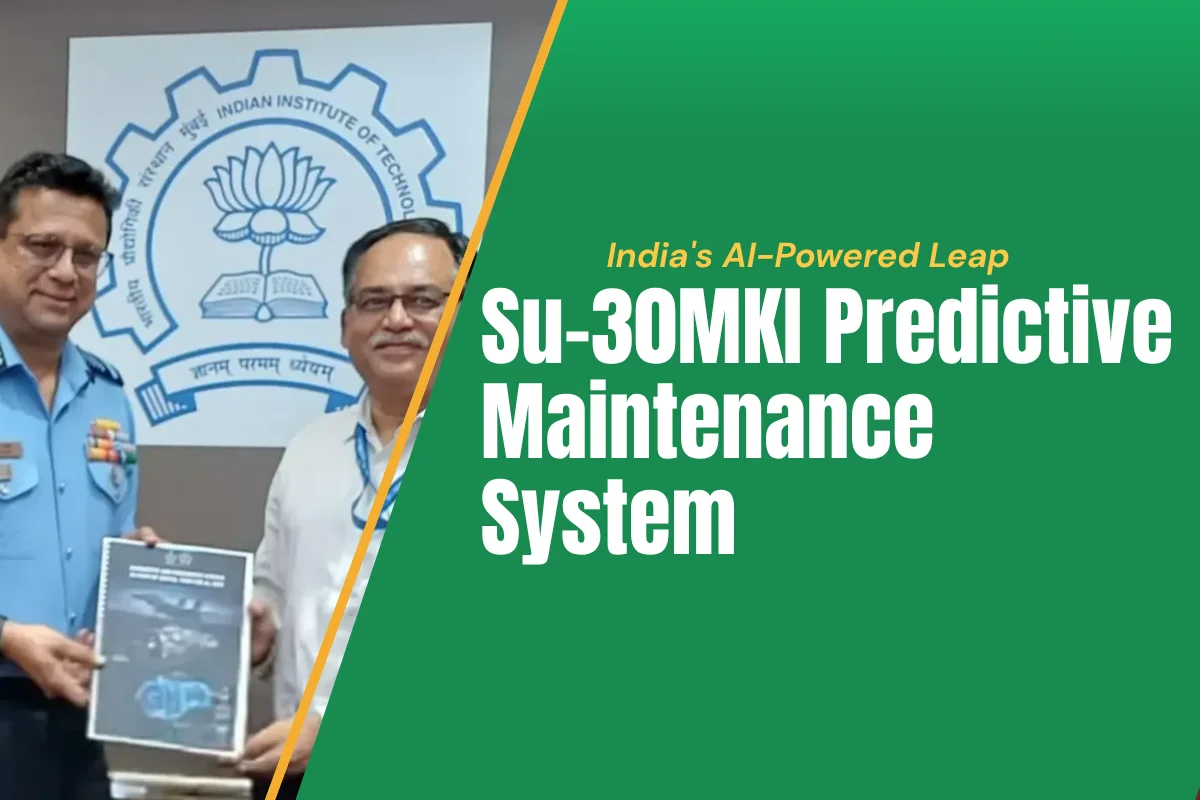
India’s defence modernization efforts have taken another significant step forward with the introduction of the Su-30MKI Predictive Maintenance System. The initiative aims to leverage Artificial Intelligence (AI), Machine Learning (ML), and data analytics to enhance the operational readiness of the Indian Air Force’s frontline fighter aircraft fleet.
The development is a major milestone in India’s pursuit of technological self-reliance under the Atmanirbhar Bharat initiative and highlights the growing role of emerging technologies in national security.
For UPSC aspirants, the topic is highly relevant for Science & Technology, Defence, Internal Security, Artificial Intelligence, and Defence Modernization.
What is the Su-30MKI Predictive Maintenance System?
The Su-30MKI Predictive Maintenance System is an AI-enabled maintenance framework designed to monitor the health of aircraft systems and predict potential failures before they occur.
Unlike traditional maintenance models that rely on scheduled inspections or repairs after faults occur, predictive maintenance uses real-time data and advanced analytics to identify early warning signs of equipment degradation.
This enables maintenance teams to take preventive action before a component fails.
About the Su-30MKI Fighter Aircraft
The Sukhoi Su-30MKI is the backbone of the Indian Air Force (IAF).
Key Features
Twin-engine multirole fighter aircraft
Developed jointly by India and Russia
Manufactured in India by Hindustan Aeronautics Limited
Equipped for air superiority and ground attack missions
Can carry a wide range of missiles and precision-guided weapons
One of the most advanced fighter aircraft in Asia
The IAF operates a large fleet of Su-30MKI aircraft, making efficient maintenance critical for national security.
How Does Predictive Maintenance Work?
The Predictive Maintenance System relies on multiple technologies:
1. Sensors and Data Collection
Aircraft components continuously generate operational data through embedded sensors.
These sensors monitor:
Engine performance
Fuel systems
Hydraulic systems
Avionics
Flight control mechanisms
2. Artificial Intelligence and Machine Learning
AI algorithms analyze massive volumes of operational data to identify abnormal patterns.
Machine learning models continuously improve their predictions based on historical maintenance records.
3. Real-Time Monitoring
Ground maintenance teams receive alerts regarding potential component failures.
This allows timely intervention before breakdowns occur.
4. Predictive Analytics
The system forecasts the remaining operational life of critical components, enabling optimized maintenance schedules.
Why is the Su-30MKI Predictive Maintenance System Important?
Enhanced Operational Readiness
Aircraft spend less time in maintenance and more time available for missions.
Reduced Maintenance Costs
Preventing failures before they occur significantly lowers repair costs.
Improved Flight Safety
Early detection of defects minimizes risks associated with equipment malfunction.
Increased Aircraft Availability
The system ensures a greater number of combat-ready aircraft at any given time.
Data-Driven Decision Making
Maintenance planning becomes more efficient and scientific.
Significance for India’s Defence Sector
The adoption of predictive maintenance reflects a broader transformation in India’s defence ecosystem.
Defence Modernization
The system demonstrates India’s commitment to integrating advanced technologies into military operations.
Atmanirbhar Bharat
Indigenous technological capabilities reduce dependence on foreign maintenance systems.
Force Multiplication
Higher aircraft availability enhances combat effectiveness without increasing fleet size.
Future Military Applications
The technology can eventually be extended to:
Fighter aircraft
Helicopters
Naval vessels
Armoured vehicles
Missile systems
Role of Artificial Intelligence in Defence
Artificial Intelligence is rapidly becoming a strategic asset in modern warfare.
Applications include:
Autonomous systems
Battlefield surveillance
Predictive maintenance
Threat detection
Cybersecurity
Logistics optimization
Decision support systems
India has increasingly focused on integrating AI into defence planning and operations.
Related Reading:
Challenges in Implementing Predictive Maintenance
Despite its advantages, several challenges remain:
Data Security
Sensitive defence data must be protected against cyber threats.
High Initial Investment
Developing advanced predictive systems requires significant financial resources.
Technical Expertise
Specialized personnel are needed to manage AI-driven maintenance systems.
Integration Challenges
Legacy platforms may require modifications to support predictive technologies.
UPSC Relevance
GS Paper III
The topic is important under:
Defence Technology
Artificial Intelligence
Science and Technology
National Security
Indigenization of Technology
Prelims Focus Areas
Su-30MKI fighter aircraft
Predictive maintenance
Artificial Intelligence applications
Atmanirbhar Bharat in Defence
Defence modernization initiatives
Mains Perspective
Question: Discuss the role of Artificial Intelligence in enhancing the operational readiness of India’s defence forces.
The Su-30MKI Predictive Maintenance System can be used as a contemporary example.
Key Facts for UPSC Prelims
| Topic | Details |
|---|---|
| Aircraft | Su-30MKI |
| Operated By | Indian Air Force |
| Manufacturer in India | Hindustan Aeronautics Limited (HAL) |
| Technology Used | Artificial Intelligence and Machine Learning |
| Purpose | Predict aircraft component failures |
| Benefits | Reduced downtime, improved safety, higher readiness |
| Relevance | Defence Modernization and AI Integration |
Way Forward
As military platforms become increasingly sophisticated, predictive maintenance will become an essential component of defence readiness.
India must focus on:
Expanding AI adoption in defence.
Strengthening indigenous defence technologies.
Enhancing cybersecurity capabilities.
Building skilled technical manpower.
Integrating predictive analytics across military assets.
These measures will contribute significantly to India’s goal of becoming a technologically advanced military power.
Conclusion
The Su-30MKI Predictive Maintenance System represents a major advancement in India’s defence technology ecosystem. By leveraging Artificial Intelligence and Machine Learning, the Indian Air Force can improve operational readiness, reduce maintenance costs, and enhance mission effectiveness.
The initiative not only strengthens India’s air power but also demonstrates the growing role of emerging technologies in national security. For UPSC aspirants, the topic provides valuable insights into defence modernization, AI applications, and India’s journey toward technological self-reliance.
For more Defence, Science & Technology, and UPSC Current Affairs updates, visit:
FAQs
1. What is the Su-30MKI Predictive Maintenance System?
The Su-30MKI Predictive Maintenance System is an AI-powered maintenance framework designed to monitor aircraft health and predict potential component failures before they occur. It helps the Indian Air Force improve aircraft availability, safety, and operational efficiency.
2. Why is the Su-30MKI Predictive Maintenance System important?
The system reduces unexpected equipment failures, lowers maintenance costs, enhances flight safety, and ensures that more Su-30MKI fighter aircraft remain mission-ready at all times.
3. How does predictive maintenance work in the Su-30MKI aircraft?
Predictive maintenance uses sensors, real-time data collection, Artificial Intelligence (AI), Machine Learning (ML), and predictive analytics to identify abnormal patterns and forecast component failures before they affect aircraft performance.
4. What technologies are used in the Su-30MKI Predictive Maintenance System?
The system utilizes:
- Artificial Intelligence (AI)
- Machine Learning (ML)
- Big Data Analytics
- Internet of Things (IoT) Sensors
- Real-Time Monitoring Systems
- Predictive Analytics
5. What are the benefits of predictive maintenance for the Indian Air Force?
Major benefits include:
- Increased aircraft availability
- Reduced maintenance downtime
- Improved mission readiness
- Enhanced flight safety
- Lower lifecycle maintenance costs
- Better resource utilization
6. What is the Su-30MKI fighter aircraft?
The Su-30MKI is a twin-engine, multirole fighter aircraft operated by the Indian Air Force. Developed jointly by India and Russia, it is manufactured in India by Hindustan Aeronautics Limited (HAL) and serves as the backbone of India’s air combat capability.
7. How does Artificial Intelligence help in military aircraft maintenance?
Artificial Intelligence analyzes large volumes of operational data to detect early signs of wear, system degradation, or equipment malfunction. This allows maintenance teams to address issues before they lead to failures.
Ask your Query
Recent Posts
- What Should a Good UPSC Foundation Course Include? Complete Checklist for Beginners
- India Energy Week 2027: Key Highlights
- HPAS Coaching in Mandi: Offline vs Online Classes for HAS Aspirants
- How to Use Himachal Pradesh Economic Survey and Budget for HPAS 2027 Preparation
- Best Books for HPAS Prelims and Mains Preparation
Browse By Category
- Chandigarh Exam (1)
- Daily Current Affairs (4)
- Defence (1)
- EPFO (8)
- HP Allied (19)
- HP Teaching Exams (4)
- HPAS/HAS (76)
- IAS (86)
- Monthly Current Affairs (1)
- NET Exam (3)
- New Notifications (5)
- PCS (71)
- UPSC (85)
- Weekly Current Affairs (2)
- Yearly Current Affairs (5)

Archives
- October 2026 (3)
- September 2026 (10)
- August 2026 (11)
- July 2026 (13)
- June 2026 (10)
- May 2026 (11)
- April 2026 (10)
- March 2026 (10)
- February 2026 (10)
- January 2026 (9)
- December 2025 (8)
- November 2025 (10)
- October 2025 (10)
- September 2025 (10)
- August 2025 (10)
- July 2025 (6)


Leave Comment