
 May 1, 2026
 No Comments
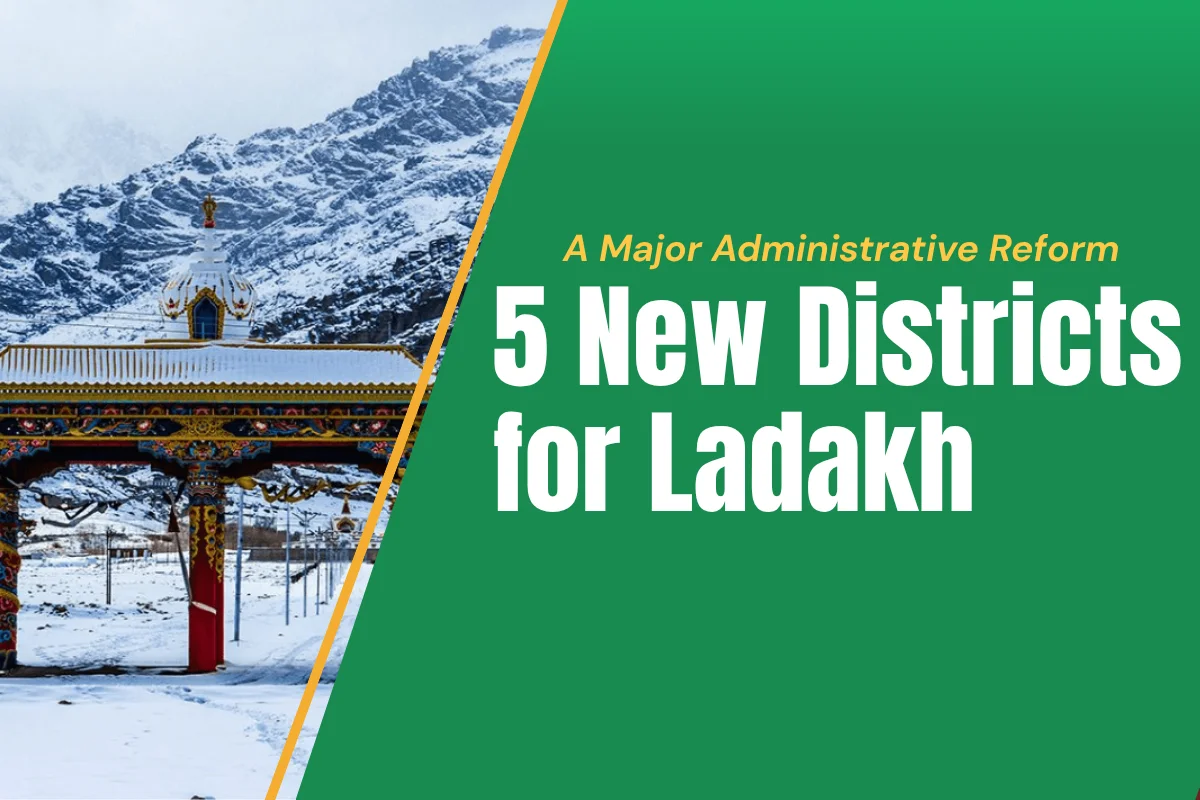
5 New Districts for Ladakh: A Major Administrative Reform
The Union Territory of Ladakh is set to witness a major administrative transformation with the proposal for five new districts. This move aims to strengthen governance, improve public service delivery, and enhance development in one of India’s most strategically important regions.
Currently, Ladakh has only two districts—Leh and Kargil. The addition of new districts is expected to bring administration closer to remote populations while boosting infrastructure, connectivity, and security management.
Proposed 5 New Districts in Ladakh
The proposed districts are expected to include regions such as:
- Zanskar
- Drass
- Sham
- Nubra
- Changthang
These areas are geographically vast and often difficult to administer due to harsh terrain and climatic conditions.

Why is Ladakh Getting New Districts?
Improving Administrative Efficiency
Remote villages in Ladakh face challenges in accessing government services. New districts will:
- Reduce administrative burden
- Improve governance at grassroots level
- Ensure faster delivery of welfare schemes
Strategic Importance
Ladakh shares borders with both China and Pakistan, making it strategically critical for India.
New districts can help:
- Strengthen border administration
- Improve disaster and security response
- Accelerate infrastructure development in frontier areas
Balanced Regional Development
Several regions in Ladakh remain underdeveloped because of difficult terrain and sparse population.
The creation of new districts may:
- Boost tourism
- Improve healthcare and education access
- Increase local employment opportunities
Administrative and Political Significance
The move reflects the Union Government’s focus on:
- Decentralized governance
- Border area development
- Improved representation for remote communities
Since becoming a Union Territory in 2019, Ladakh has seen increased focus on infrastructure, connectivity, and governance reforms.
Impact on Border Security and Infrastructure
The establishment of new districts could accelerate:
- Road connectivity projects
- Digital infrastructure
- Border village development
- Emergency response systems
This aligns with India’s broader strategy of strengthening border regions.
UPSC Relevance
Prelims Focus
- Union Territories of India
- Administrative divisions in India
- Strategic importance of Ladakh
Mains Focus
“Discuss the significance of administrative decentralization in border regions with reference to Ladakh.”
Challenges Ahead
Despite the benefits, several challenges remain:
- Harsh climate and terrain
- Limited resources and manpower
- Infrastructure constraints
- Environmental sensitivity of the Himalayan region
Effective implementation will require long-term planning and sustainable development strategies.
Conclusion
The proposal for 5 new districts in Ladakh marks a significant step toward better governance and strategic development in India’s northern frontier. By improving administrative accessibility and strengthening border infrastructure, the move can reshape the socio-economic landscape of Ladakh while reinforcing India’s national security priorities.
For UPSC aspirants, this development highlights the growing importance of administrative reforms, border management, and regional development in contemporary governance.
FAQs
Q1. How many districts are currently in Ladakh?
Currently, Ladakh has two districts: Leh and Kargil.
Q2. Why are new districts being created in Ladakh?
To improve governance, administration, connectivity, and development in remote regions.
Q3. Which areas may become new districts?
Regions like Zanskar, Drass, Sham, Nubra, and Changthang are expected to be included.
Q4. Why is Ladakh strategically important?
Ladakh borders China and Pakistan, making it vital for India’s national security.
Q5. How is this relevant for UPSC?
The topic is important for Polity, Governance, Internal Security, and Geography sections of UPSC preparation.
Tags
5 new districts for Ladakhborder infrastructure IndiaChangthang LadakhCurrent Affairs for UPSCIndia border securityIndia China borderLadakh administrative reformsLadakh current affairsLadakh developmentLadakh governanceLadakh new districtsLadakh news 2026Nubra districtstrategic importance of LadakhUnion Territory LadakhUPSC geographyUPSC polityZanskar districtAsk your Query
Recent Posts
- UPSC Prelims 2026 Paper Analysis: Subject-Wise Difficulty and Lessons for IAS 2027
- UPSC CSAT Preparation Strategy 2027: Complete Study Plan, Syllabus and Tips for Beginners
- Asian Games 2026: Winners & Key Highlights
- HPAS Mains Answer Writing Strategy: Tips, Format and Examples
- What Should a Good UPSC Foundation Course Include? Complete Checklist for Beginners
Browse By Category
- Chandigarh Exam (1)
- Daily Current Affairs (4)
- Defence (1)
- EPFO (9)
- HP Allied (19)
- HP Teaching Exams (4)
- HPAS/HAS (77)
- IAS (90)
- Monthly Current Affairs (1)
- NET Exam (3)
- New Notifications (5)
- PCS (73)
- UPSC (89)
- Weekly Current Affairs (2)
- Yearly Current Affairs (5)

Archives
- October 2026 (7)
- September 2026 (10)
- August 2026 (11)
- July 2026 (13)
- June 2026 (10)
- May 2026 (11)
- April 2026 (10)
- March 2026 (10)
- February 2026 (10)
- January 2026 (9)
- December 2025 (8)
- November 2025 (10)
- October 2025 (10)
- September 2025 (10)
- August 2025 (10)
- July 2025 (6)


Leave Comment