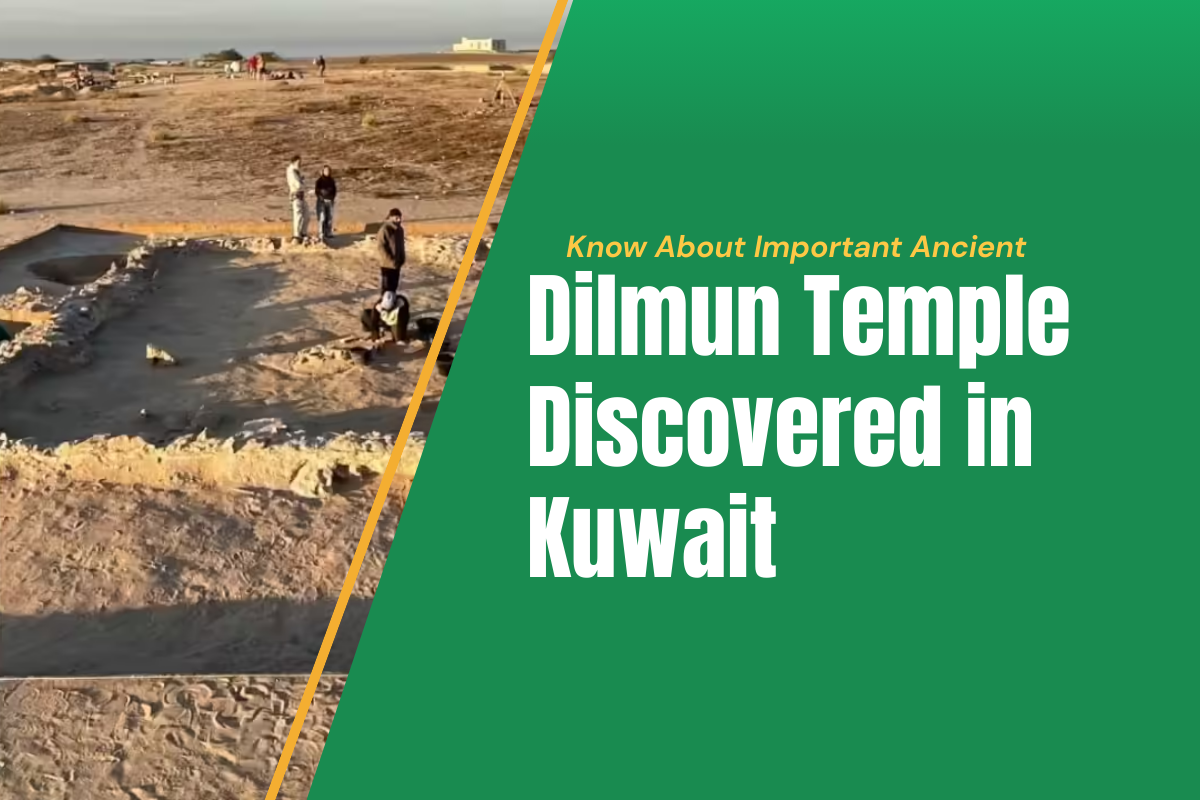
The discovery of an ancient Dilmun temple in Kuwait has attracted significant attention in the world of archaeology and UPSC current affairs. Such findings are extremely important for aspirants as UPSC frequently asks questions linking ancient civilizations, trade networks, and cultural exchanges in Prelims and Mains.
In this blog by Civilstap, we explain everything you need to know about the Dilmun Civilization and the newly discovered Dilmun temple in Kuwait, in a crisp, exam-oriented manner. This topic is highly relevant for aspirants preparing through UPSC coaching in Chandigarh, IAS coaching in Chandigarh, PCS coaching in Chandigarh, and HPAS coaching in Chandigarh.
What Is the Dilmun Civilization?
The Dilmun Civilization was an ancient trading culture that flourished around 3000–1000 BCE in the Persian Gulf region.
Key Highlights of Dilmun Civilization
Acted as a trade link between Mesopotamia and the Indus Valley
Mentioned in Sumerian texts
Known for maritime trade, temples, and settlements
Important centres: Bahrain, Failaka Island (Kuwait), Eastern Arabia
Such topics are well covered in Civilstap Study Material for History & Culture:
https://civilstap.com/study-material/
Location of the Dilmun Temple Discovery
The recently discovered Dilmun temple is located in Kuwait, particularly linked to Failaka Island, which was an important Dilmun settlement.
| Aspect | Details |
|---|
| Country | Kuwait |
| Region | Persian Gulf |
| Civilization | Dilmun |
| Time Period | Bronze Age |
| Importance | Religious & trade centre |
Why Is the Dilmun Temple Discovery Important?
The discovery is crucial because it:
Confirms Dilmun’s religious practices
Highlights Kuwait’s role in ancient maritime trade
Strengthens evidence of Indus–Mesopotamia connections
Adds new dimensions to Bronze Age urban culture
Such discoveries are often linked with current affairs, so aspirants should revise them regularly from:
https://civilstap.com/new-current-affairs/
Key Archaeological Features of the Dilmun Temple
Archaeologists observed:
Stone foundations of a temple structure
Ritual spaces indicating religious activities
Artifacts related to trade and daily life
Alignment suggesting planned construction
| Feature | Significance |
|---|
| Stone altar | Religious practices |
| Trade artifacts | Commercial importance |
| Planned layout | Urban planning |
| Location near coast | Maritime trade |
Dilmun Civilization & India’s Ancient Trade Links
UPSC often connects foreign civilizations with Indian history.
Trade Connections
Indus Valley exported beads, pottery, seals
Dilmun acted as an intermediary
Mesopotamian records refer to Dilmun as a prosperous land
This topic is important for Ancient History + World History integration.
Aspirants can revise such comparative notes using Free Downloads by Civilstap:
https://civilstap.com/download/
UPSC Prelims & Mains Relevance
Prelims
Mains (GS-I)
Practice similar MCQs using Civilstap Daily Quiz:
https://civilstap.com/daily-quiz/
Why Aspirants Should Not Miss This Topic
Part of culture & archaeology current affairs
High probability for Prelims factual questions
Useful for value addition in Mains answers
Helps in understanding India’s global ancient connections
For integrated preparation, aspirants can explore Civilstap Courses:
https://civilstap.com/courses/
Civilstap’s Exam-Oriented Approach
Civilstap ensures that:
Ancient discoveries are linked with UPSC syllabus
Static history is connected with current affairs
Content is crisp, revision-friendly, and exam-focused
This makes Civilstap a preferred platform for aspirants seeking UPSC coaching in Chandigarh, IAS coaching in Chandigarh, PCS coaching in Chandigarh, and HPAS coaching in Chandigarh.

 November 3, 2025
 No Comments
 January 6, 2026







Leave Comment