
 March 29, 2026
 No Comments
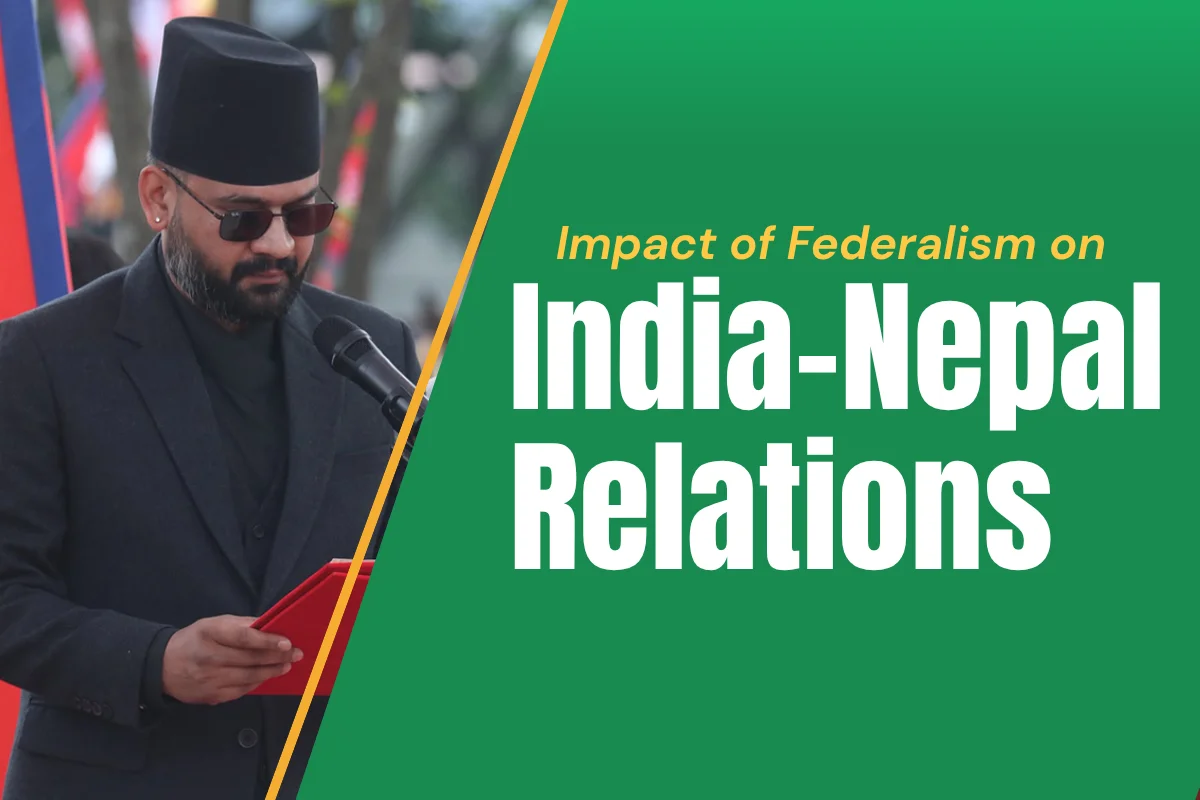
Federalism in Nepal and Its Impact on India–Nepal Relations in 2026
Nepal’s political transformation over the past decade has been one of South Asia’s most significant governance shifts. With the adoption of a federal democratic republic system, Nepal redefined its internal power structure—and in 2026, this federal framework is increasingly shaping its foreign policy, especially relations with India.
For aspirants preparing for competitive exams, understanding this intersection of federalism and international relations is crucial. If you want structured preparation on such topics, you can explore CivilsTap’s courses at https://civilstap.com/courses/ which are designed specifically for UPSC and HPAS aspirants.
Understanding Federalism in Nepal
Federalism in Nepal was formally introduced with the promulgation of the 2015 Constitution of Nepal. The country was reorganized into:
- 7 Provinces
- 77 Districts
- 753 Local Government Units
Key Features of Nepal’s Federal Structure
- Division of powers among federal, provincial, and local governments
- Constitutional clarity on exclusive and concurrent powers
- Emphasis on inclusion and decentralization
- Greater autonomy to provinces in governance and development
This shift aimed to address long-standing issues of regional inequality, ethnic representation, and centralized authority—topics frequently covered in CivilsTap’s updated current affairs section at https://civilstap.com/new-current-affairs/.
Why Federalism Matters in 2026
In 2026, Nepal’s federal system is still evolving and faces multiple challenges:
1. Political Instability
Frequent government changes at both federal and provincial levels affect policy continuity.
2. Coordination Issues
Overlap of powers often leads to conflicts between federal and provincial governments.
3. Resource Constraints
Provinces depend heavily on federal funding, limiting true autonomy.
4. Administrative Capacity
Local bodies still lack adequate infrastructure and skilled manpower.
To practice such governance-related topics, aspirants can test themselves regularly using CivilsTap’s daily quiz platform: https://civilstap.com/daily-quiz/.
India–Nepal Relations: A Strategic Overview
India and Nepal share:
- Open borders
- Deep cultural and historical ties
- Strong economic interdependence
Key pillars of the relationship include:
- Trade & Transit
- Hydropower Cooperation
- Security & Border Management
- People-to-People Connections
For deeper conceptual clarity, aspirants can also refer to CivilsTap’s study resources at https://civilstap.com/study-material/ which cover India’s neighborhood relations comprehensively.
Impact of Federalism on India–Nepal Relations (2026)
1. Rise of Provincial Diplomacy
With federalism, Nepal’s provinces are gaining importance in cross-border trade, infrastructure, and cultural exchanges.
Indian states like Bihar, Uttar Pradesh, and Uttarakhand now interact more directly with Nepali provinces, adding a new dimension to bilateral relations.
2. Border Management Becomes Complex
Decentralization means local governments also influence border-related issues. This sometimes increases sensitivity around disputes and requires multi-level coordination.
3. Hydropower & Infrastructure Projects
Federalism affects project approvals due to involvement of multiple levels of government. While this can delay execution, it also improves accountability and transparency.
4. Political Diversity and Policy Shifts
Different provinces may have different political leanings, influencing foreign policy outlook at the grassroots level. This creates a layered diplomatic environment for India.
5. Grassroots Connectivity Improves
Federalism promotes local development and cross-border trade at regional levels, strengthening economic ties between the two countries.
Opportunities for India in 2026
- Strengthening state-to-province cooperation
- Investing in regional infrastructure
- Enhancing people-to-people diplomacy
- Supporting Nepal’s federal governance capacity
Challenges for India
- Managing relations across multiple governance levels
- Addressing border disputes diplomatically
- Balancing China’s growing presence in Nepal
- Ensuring timely completion of bilateral projects
Way Forward
To strengthen ties with a federal Nepal, India should:
- Engage with both central and provincial governments
- Promote inclusive and region-specific development projects
- Respect Nepal’s sovereignty while deepening cooperation
- Focus on long-term strategic trust-building
Conclusion
Nepal’s federalism is not just a domestic reform—it is reshaping regional geopolitics. In 2026, India–Nepal relations are increasingly influenced by provincial actors, local governance, and decentralized decision-making.
For serious aspirants, this topic perfectly connects Polity, International Relations, and Current Affairs—making it highly relevant for UPSC and HPAS exams. To stay ahead, regularly follow platforms like CivilsTap and integrate conceptual learning with current developments.
FAQs
Q1. When did Nepal adopt federalism?
Nepal adopted federalism through its 2015 Constitution.
Q2. How many provinces are there in Nepal?
There are 7 provinces in Nepal.
Q3. How does federalism affect India–Nepal relations?
It decentralizes power, making provincial governments important stakeholders in bilateral cooperation.
Q4. What are the major challenges in Nepal’s federal system?
Political instability, coordination issues, and limited financial autonomy.
Q5. Why is this topic important for UPSC/HPAS?
It combines governance, international relations, and current affairs—frequently asked in exams.
Ask your Query
Recent Posts
- HP Allied Services Coaching in Chandigarh 2026 – Online & Offline Classes
- Kishau Multipurpose Project 2026: Key Features, Six-State Agreement and Importance for HPAS
- UPSC Prelims 2026 Paper Analysis: Subject-Wise Difficulty and Lessons for IAS 2027
- UPSC CSAT Preparation Strategy 2027: Complete Study Plan, Syllabus and Tips for Beginners
- Asian Games 2026: Winners & Key Highlights
Browse By Category
- Chandigarh Exam (1)
- Daily Current Affairs (4)
- Defence (1)
- EPFO (9)
- HP Allied (19)
- HP Teaching Exams (4)
- HPAS/HAS (79)
- IAS (90)
- Monthly Current Affairs (1)
- NET Exam (3)
- New Notifications (5)
- PCS (73)
- UPSC (89)
- Weekly Current Affairs (2)
- Yearly Current Affairs (5)

Archives
- October 2026 (9)
- September 2026 (10)
- August 2026 (11)
- July 2026 (13)
- June 2026 (10)
- May 2026 (11)
- April 2026 (10)
- March 2026 (10)
- February 2026 (10)
- January 2026 (9)
- December 2025 (8)
- November 2025 (10)
- October 2025 (10)
- September 2025 (10)
- August 2025 (10)
- July 2025 (6)


Leave Comment