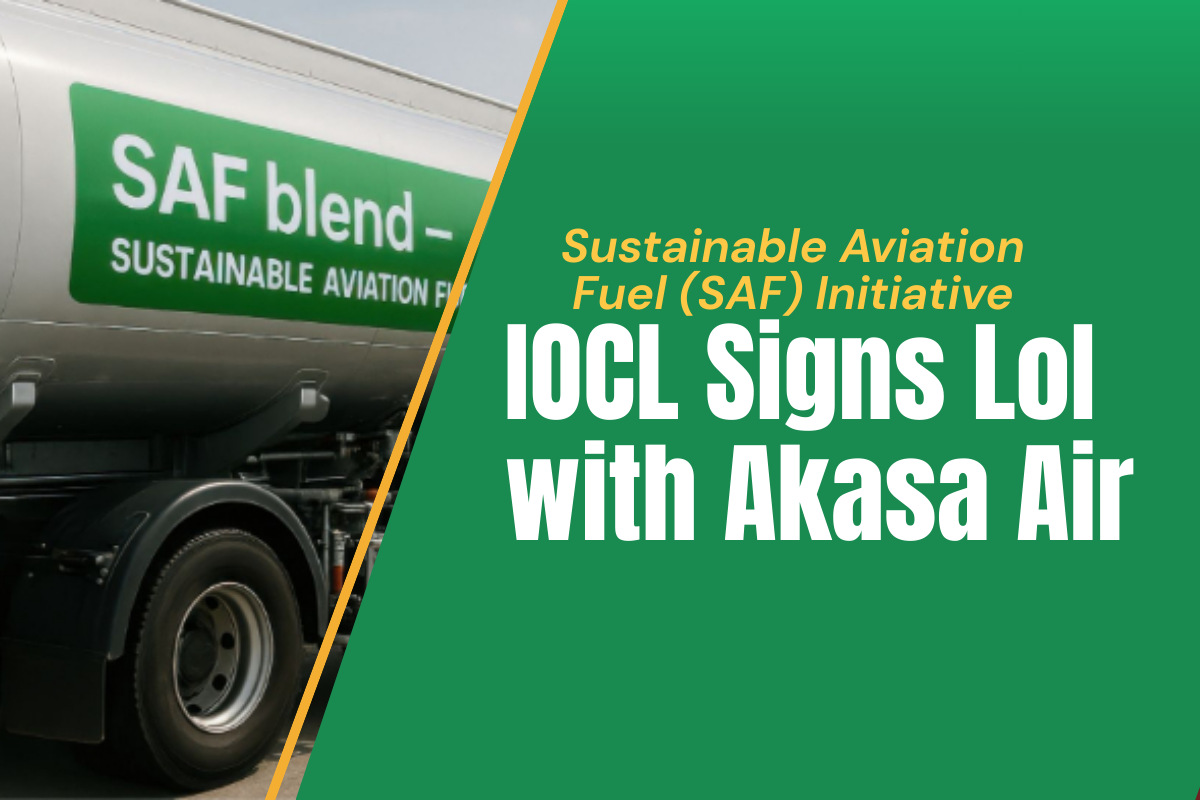
Indian Oil Corporation Limited (IOCL) has signed a Letter of Intent (LoI) with Akasa Air to collaborate on the use and promotion of Sustainable Aviation Fuel (SAF) in India.
This initiative marks a significant step toward decarbonizing India’s aviation sector and promoting green energy solutions.
The development is highly relevant under Environment, Energy Security, and Infrastructure Development, and is regularly covered in the Current Affairs section of CivilsTap.
What is Sustainable Aviation Fuel (SAF)?
Sustainable Aviation Fuel (SAF) is an eco-friendly alternative to conventional jet fuel, produced from:
Used cooking oil
Agricultural residue
Municipal solid waste
Algae and biomass
SAF reduces lifecycle carbon emissions by up to 80% compared to traditional aviation fuel.
Concepts related to renewable energy and green fuels are explained in detail in CivilsTap Study Material under Environment & Energy topics.
Key Highlights of the IOCL–Akasa Air Agreement
| Aspect | Details |
|---|
| Agreement Type | Letter of Intent (LoI) |
| Parties Involved | IOCL & Akasa Air |
| Objective | Supply and adoption of SAF |
| Goal | Reduce aviation carbon emissions |
| Alignment | India’s Net Zero target (2070) |
The collaboration indicates India’s growing commitment toward sustainable infrastructure and climate goals.
Why Is This Initiative Important?
The aviation sector is one of the fastest-growing sources of greenhouse gas emissions globally.
Environmental Significance:
Reduces carbon footprint
Promotes circular economy
Encourages waste-to-energy conversion
Supports climate commitments
Aviation Sector Impact:
These developments are often analyzed in depth in CivilsTap’s Environment modules available in CivilsTap Courses.
How SAF is Produced
| Stage | Process |
|---|
| Feedstock Collection | Waste oils, agricultural residues |
| Conversion | Chemical processing into biofuel |
| Refining | Purification and blending |
| Distribution | Supply to airlines |
| Usage | Blended with conventional jet fuel |
This production chain connects directly with topics such as Biofuels, Renewable Energy, and Sustainable Development, important for UPSC GS-III.
India’s Push for Sustainable Aviation
India is actively promoting SAF through:
National Bio-Energy Mission
Green Hydrogen & Renewable Energy policies
Civil Aviation decarbonization roadmap
India aims to become a global hub for green fuels and sustainable aviation technology.
To stay updated on such initiatives, aspirants should regularly follow the Current Affairs section.
Challenges in SAF Implementation
| Challenge | Explanation |
|---|
| High Production Cost | SAF is costlier than traditional jet fuel |
| Limited Feedstock | Scaling raw material supply |
| Infrastructure Needs | Storage and blending facilities |
| Policy Support | Need for incentives and subsidies |
Despite these challenges, partnerships like IOCL–Akasa Air create momentum for green transformation.
Exam Relevance for UPSC & State PCS
This topic can be linked to:
GS-III: Environment & Climate Change
GS-III: Energy Security
Sustainable Development Goals
Biofuel Policies in India
| Exam Stage | Possible Question Type |
|---|
| Prelims | Biofuel classification |
| Mains | Role of SAF in reducing aviation emissions |
| Interview | India’s strategy for green aviation |
To strengthen preparation:
Quick Summary Table
| Aspect | Key Insight |
|---|
| Initiative | IOCL–Akasa Air SAF LoI |
| Objective | Promote Sustainable Aviation Fuel |
| Benefit | Reduce aviation emissions |
| Policy Alignment | Net Zero 2070 |
| Exam Focus | Biofuels & Climate Action |
Conclusion
The LoI between IOCL and Akasa Air represents a significant milestone in India’s journey toward sustainable aviation and cleaner energy solutions. By promoting SAF adoption, India strengthens its commitment to climate action and green infrastructure.
For civil services aspirants, this initiative serves as a practical example of how public sector enterprises and private airlines collaborate to achieve environmental sustainability goals.
Strategic preparation using CivilsTap ensures you understand both the policy framework and its broader environmental implications.

 February 4, 2026
 No Comments
 February 21, 2026






Leave Comment