
 January 9, 2026
 No Comments
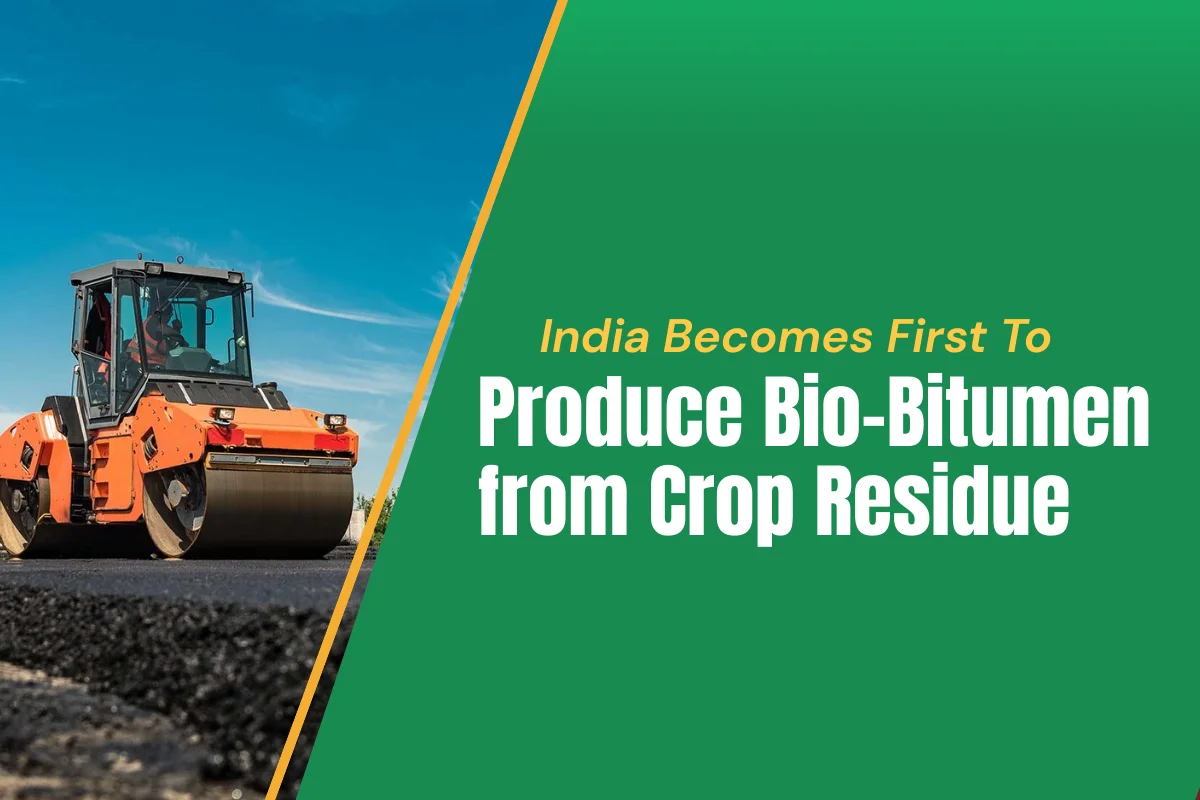
India Becomes First To Produce Bio-Bitumen from Crop Residue
Introduction
India has emerged as a global leader in sustainable infrastructure by becoming the first country to commercially produce and use bio-bitumen from agricultural waste (crop residue) for road construction.
This breakthrough not only addresses the persistent problem of stubble burning but also strengthens India’s commitment toward green infrastructure and climate sustainability.
For aspirants preparing under Environment, Science & Technology, and Infrastructure Development, this topic is extremely important and can be revised in depth through CivilsTap Study Material and the latest updates in Current Affairs.
What is Bio-Bitumen?
Bio-bitumen is an eco-friendly alternative to petroleum-based bitumen produced using renewable biomass such as crop residue.
Unlike conventional bitumen derived from crude oil refining, bio-bitumen is made from:
Rice husk
Wheat straw
Sugarcane bagasse
Lignin and other agricultural by-products
This innovation turns agricultural waste into a valuable construction material, supporting the circular economy model.
How Bio-Bitumen is Produced from Crop Residue
| Step | Process | Outcome |
|---|---|---|
| Collection | Crop residue gathered from farms | Raw biomass input |
| Processing | Thermal or chemical treatment (Pyrolysis) | Bio-oil extraction |
| Refinement | Bio-oil converted into binder | Road-grade bio-bitumen |
| Application | Mixed with aggregates | Road construction |
This scientific process connects directly with Science & Technology topics covered in CivilsTap Courses for conceptual clarity.
Why This Breakthrough Matters
1. Tackling Stubble Burning
India faces severe air pollution due to crop residue burning in northern states.
By converting crop waste into bio-bitumen, India reduces pollution while creating economic value.
2. Supporting Climate Goals
Reduces carbon footprint
Decreases fossil fuel dependency
Promotes renewable materials
This aligns with:
India’s Net Zero target (2070)
SDG 9 (Industry & Infrastructure)
SDG 12 (Responsible Consumption)
SDG 13 (Climate Action)
Such linkages are frequently asked in Mains exams and can be revised using diagrams available in CivilsTap Free Downloads.
3. Strengthening Sustainable Infrastructure
| Feature | Conventional Bitumen | Bio-Bitumen |
|---|---|---|
| Source | Crude Oil | Crop Residue |
| Carbon Emissions | High | Significantly Lower |
| Sustainability | Non-renewable | Renewable |
| Waste Utilization | No | Yes |
| Environmental Impact | Polluting | Eco-friendly |
Bio-bitumen is a step toward Green Highways and sustainable urban development.
Government Initiatives Supporting Bio-Bitumen
India’s move aligns with:
Green Highways Policy
National Bio-Energy Mission
Waste-to-Wealth initiatives
Circular economy promotion
Such environmental policy measures are regularly covered in CivilsTap’s Current Affairs section, helping aspirants stay updated with real-time developments.
Exam Relevance for UPSC & State PSC
This topic can be asked in:
UPSC Prelims: Environment & Sustainable Development
UPSC Mains (GS-III): Infrastructure, Climate Change, Science & Technology
State PCS Exams: Agriculture & Environmental Innovation
To master such multidimensional topics:
Study conceptual basics from CivilsTap Study Material
Stay updated through Current Affairs
Practice retention-based MCQs via Daily Quiz
Deepen understanding using structured CivilsTap Courses
Quick Summary Table
| Aspect | Key Insight | Exam Importance |
|---|---|---|
| Innovation | First commercial bio-bitumen from crop residue | Science & Tech |
| Environmental Impact | Reduces air pollution & emissions | Climate change topic |
| Economic Benefit | Adds value to agricultural waste | Circular economy |
| Policy Alignment | Green Highways & SDGs | Governance & policy |
| Sustainability Goal | Supports Net Zero target | GS-III relevance |
Challenges Ahead
Despite its promise, bio-bitumen faces some hurdles:
Higher initial production costs
Need for large-scale biomass collection
Long-term durability testing
Scaling up production capacity
However, with technological improvements and government support, bio-bitumen has strong future potential.
Conclusion
India’s achievement in producing bio-bitumen from crop residue marks a historic milestone in sustainable infrastructure development. It transforms a major environmental problem into an economic and ecological opportunity.
For civil services aspirants, this topic beautifully connects agriculture, environment, economy, and governance—making it highly relevant for both Prelims and Mains.
Leveraging CivilsTap’s integrated preparation ecosystem ensures you cover such emerging innovations thoroughly and confidently.
Ask your Query
Recent Posts
- UPSC Prelims 2026 Paper Analysis: Subject-Wise Difficulty and Lessons for IAS 2027
- UPSC CSAT Preparation Strategy 2027: Complete Study Plan, Syllabus and Tips for Beginners
- Asian Games 2026: Winners & Key Highlights
- HPAS Mains Answer Writing Strategy: Tips, Format and Examples
- What Should a Good UPSC Foundation Course Include? Complete Checklist for Beginners
Browse By Category
- Chandigarh Exam (1)
- Daily Current Affairs (4)
- Defence (1)
- EPFO (9)
- HP Allied (19)
- HP Teaching Exams (4)
- HPAS/HAS (77)
- IAS (90)
- Monthly Current Affairs (1)
- NET Exam (3)
- New Notifications (5)
- PCS (73)
- UPSC (89)
- Weekly Current Affairs (2)
- Yearly Current Affairs (5)

Archives
- October 2026 (7)
- September 2026 (10)
- August 2026 (11)
- July 2026 (13)
- June 2026 (10)
- May 2026 (11)
- April 2026 (10)
- March 2026 (10)
- February 2026 (10)
- January 2026 (9)
- December 2025 (8)
- November 2025 (10)
- October 2025 (10)
- September 2025 (10)
- August 2025 (10)
- July 2025 (6)


Leave Comment